Anonymous Social Trading: The Future of Secure and Private Cryptocurrency Investments
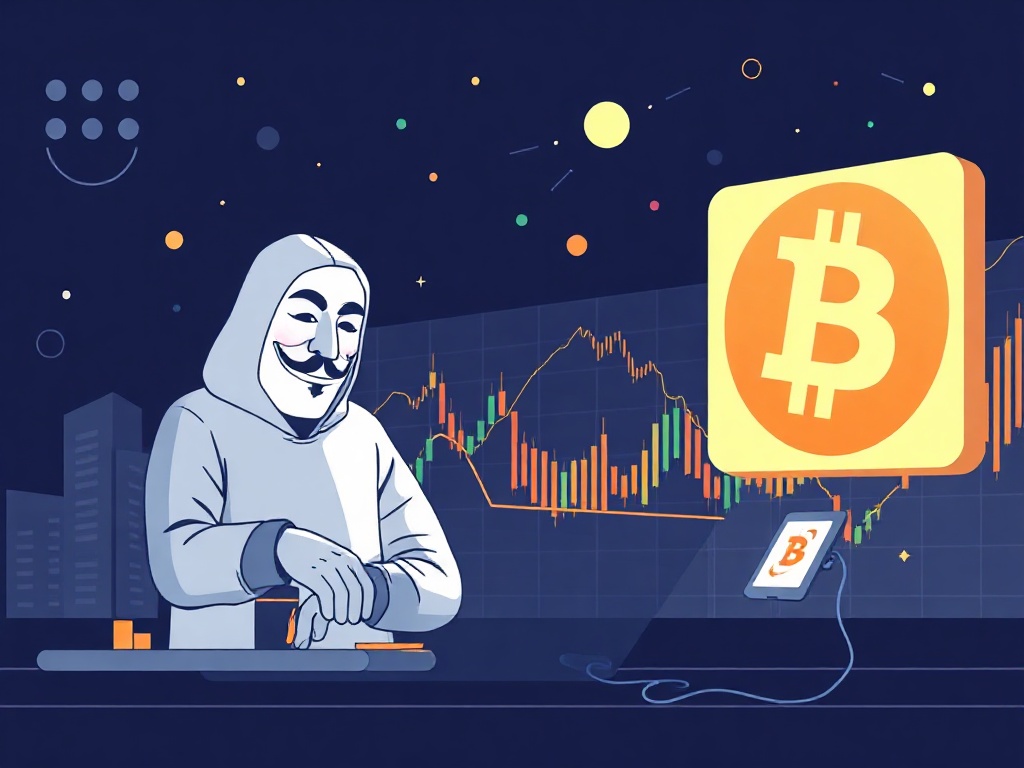
In the rapidly evolving world of cryptocurrency, anonymous social trading has emerged as a groundbreaking innovation, combining the power of social interaction with the privacy and security of decentralized finance. As traditional trading platforms face increasing scrutiny over data privacy and regulatory compliance, traders are seeking alternatives that prioritize anonymity without sacrificing performance. This comprehensive guide explores the concept of anonymous social trading, its benefits, challenges, and how it is reshaping the way investors engage with digital assets.
The rise of blockchain technology has paved the way for anonymous social trading platforms that allow users to share strategies, follow expert traders, and execute trades—all while maintaining their financial privacy. Unlike conventional social trading networks that require identity verification, these platforms leverage cryptographic techniques to ensure that users can participate without revealing personal information. This shift not only enhances security but also democratizes access to trading opportunities for individuals in regions with strict financial regulations.
In this article, we will delve into the mechanics of anonymous social trading, compare it with traditional social trading, and provide insights into how you can get started. Whether you are a seasoned trader or a beginner looking to explore the crypto space, understanding anonymous social trading could be the key to unlocking a more private and efficient investment experience.
The Rise of Anonymous Social Trading in the Cryptocurrency Ecosystem
Understanding Social Trading and Its Evolution
Social trading is a financial innovation that allows investors to observe and replicate the trading strategies of experienced traders. This approach has gained immense popularity in traditional markets, particularly in forex and stocks, where platforms like eToro and ZuluTrade have become household names. However, these platforms often require users to disclose personal identities, bank details, and other sensitive information, raising concerns about data security and privacy.
The cryptocurrency market, with its emphasis on decentralization and pseudonymity, has naturally gravitated toward anonymous social trading as a solution. Unlike traditional social trading, which operates within centralized frameworks, anonymous social trading leverages blockchain and peer-to-peer (P2P) networks to facilitate secure, private, and censorship-resistant trading interactions. This evolution reflects a broader trend in the crypto space: the shift from centralized to decentralized financial systems.
Why Anonymity Matters in Social Trading
Anonymity in social trading serves several critical purposes:
- Privacy Protection: Users can share and follow trading strategies without exposing their real-world identities, reducing the risk of targeted attacks or harassment.
- Regulatory Compliance Avoidance: In countries with strict financial regulations, anonymous social trading allows traders to bypass Know Your Customer (KYC) and Anti-Money Laundering (AML) requirements.
- Security Against Data Breaches: Centralized platforms are frequent targets for hackers. By eliminating the need for personal data storage, anonymous social trading platforms reduce the attack surface for cybercriminals.
- Global Accessibility: Traders in jurisdictions with limited financial infrastructure can participate in global markets without the barriers of traditional banking systems.
As governments worldwide tighten regulations on cryptocurrency transactions, the demand for anonymous social trading platforms has surged. These platforms offer a lifeline for privacy-conscious investors who wish to engage in social trading without compromising their anonymity.
The Role of Blockchain in Enabling Anonymous Social Trading
Blockchain technology is the backbone of anonymous social trading, providing the infrastructure for secure, transparent, and tamper-proof transactions. Key blockchain features that facilitate anonymous social trading include:
- Decentralization: Unlike centralized servers, blockchain networks distribute data across nodes, making it nearly impossible for a single entity to control or manipulate the system.
- Pseudonymity: Users interact using cryptographic addresses (e.g., wallet IDs) rather than real names, ensuring a layer of anonymity while maintaining accountability.
- Smart Contracts: These self-executing contracts automate trading strategies and social interactions, reducing the need for intermediaries and enhancing efficiency.
- Immutability: Once a trade or transaction is recorded on the blockchain, it cannot be altered, providing a verifiable and trustless record of all activities.
Platforms leveraging blockchain for anonymous social trading often integrate additional privacy-enhancing technologies, such as:
- Zero-Knowledge Proofs (ZKPs): These cryptographic methods allow users to prove the validity of a transaction without revealing sensitive information.
- Mixers and Tumblers: Tools like Bitcoin mixers (e.g., BTCmixer) obscure the origin of funds by mixing transactions with those of other users, further enhancing privacy.
- Decentralized Identity Solutions: Platforms like Sovrin or uPort enable users to verify their identity without disclosing personal details, striking a balance between compliance and privacy.
By combining these technologies, anonymous social trading platforms create an ecosystem where traders can collaborate, learn, and profit—all while maintaining their financial privacy.
How Anonymous Social Trading Works: A Step-by-Step Guide
The Core Components of an Anonymous Social Trading Platform
To understand how anonymous social trading operates, it’s essential to break down its key components:
- User Profiles and Pseudonyms:
Instead of real names, users create profiles using cryptographic wallet addresses or unique usernames. These profiles display trading statistics, performance metrics, and strategy descriptions without revealing personal information. For example, a trader might be identified as "CryptoWhale_123" with a verified track record of 15% monthly returns.
- Strategy Sharing and Copy Trading:
Traders can publish their strategies, including entry/exit points, risk management rules, and asset allocations. Other users can then choose to "copy" these strategies, automatically replicating trades in their own portfolios. This is facilitated through smart contracts that execute trades based on predefined parameters.
- Decentralized Reputation Systems:
To build trust in an anonymous environment, platforms implement reputation systems based on performance metrics (e.g., win rate, profit/loss ratio) and community feedback. Some platforms use blockchain-based tokens to reward users for contributing valuable insights or maintaining high-performance strategies.
- Privacy-Preserving Communication:
Discussions and collaborations happen through encrypted channels, such as decentralized forums (e.g., Steemit or Peepeth) or encrypted messaging apps (e.g., Session or Status). This ensures that sensitive trading discussions remain confidential.
- Secure Fund Management:
Users deposit funds into non-custodial wallets or smart contracts, retaining full control over their assets. Platforms may integrate with privacy-focused wallets like Wasabi Wallet or Samourai Wallet to enhance security.
A Real-World Example: Trading on a Decentralized Platform
Let’s walk through a hypothetical scenario of using an anonymous social trading platform:
- Registration and Wallet Setup:
You download a decentralized trading app and create a profile using a new wallet address. The platform does not ask for your email, phone number, or ID—only a username and password (which you should store securely).
- Browsing Strategies:
You explore the platform’s strategy marketplace, where traders share their approaches. You find a strategy labeled "AlgoTrader_X" with a 12-month track record of 20% annualized returns and a low drawdown rate. The profile shows a reputation score of 95/100 based on community votes.
- Connecting Your Wallet:
You link your privacy-focused wallet (e.g., a Wasabi Wallet) to the platform. The wallet is non-custodial, meaning the platform cannot access your funds—only your trading activity is shared.
- Copying the Strategy:
You decide to allocate 0.5 BTC to this strategy. The platform generates a smart contract that mirrors the trader’s actions in real-time. All trades are executed automatically, and your funds remain in your wallet at all times.
- Monitoring and Adjusting:
You receive encrypted notifications (via a privacy-focused app) whenever the trader makes a move. You can pause or adjust the strategy at any time without revealing your identity to the trader or the platform.
- Withdrawing Profits:
After a month, your 0.5 BTC grows to 0.55 BTC. You withdraw the profits directly to your wallet, with the transaction obfuscated using a Bitcoin mixer to maintain privacy.
Key Differences Between Anonymous and Traditional Social Trading
While both anonymous social trading and traditional social trading aim to democratize trading, they differ significantly in their approach to privacy, security, and user experience. Below is a comparison table:
| Feature | Anonymous Social Trading | Traditional Social Trading |
|---|---|---|
| Identity Requirements | No KYC/AML; users trade under pseudonyms or wallet addresses. | Mandatory identity verification (ID, bank details, etc.). |
| Data Storage | Decentralized; no central database storing user data. | Centralized; user data stored on company servers (risk of breaches). |
| Fund Security | Non-custodial wallets; users retain full control of assets. | Custodial wallets; platform holds user funds (risk of theft or freezing). |
| Regulatory Compliance | Operates in a legal gray area; may avoid strict regulations. | Fully compliant with local financial laws; subject to audits. |
| Accessibility | Global access; no restrictions based on geography. | Limited by regional regulations (e.g., banned in certain countries). |
| Transparency | Public blockchain records; all trades are verifiable but pseudonymous. | Platform-controlled records; users must trust the platform’s reporting. |
As the table illustrates, anonymous social trading offers distinct advantages for users who prioritize privacy and control. However, it also comes with trade-offs, such as limited recourse in case of disputes or the absence of regulatory protections.
Top Anonymous Social Trading Platforms and Tools
Decentralized Platforms Leading the Way
The anonymous social trading space is still in its infancy, but several innovative platforms have already gained traction. Below are some of the most prominent projects in this niche:
1. Bitsgap
Bitsgap is a hybrid trading platform that combines automated trading bots with social trading features. While it requires some KYC for fiat on-ramps, its crypto-to-crypto trading and bot functionalities operate with minimal identity exposure. Users can follow and copy the strategies of top-performing bots, and all trades are executed via non-custodial wallets.
- Key Features:
- Multi-exchange trading (Binance, Kraken, etc.) with a single interface.
- Grid and DCA (Dollar-Cost Averaging) bots for automated strategies.
- Social trading module where users can share and replicate bot setups.
- No mandatory KYC for crypto trading (only for fiat deposits/withdrawals).
- Privacy Level: High (for crypto trades); moderate (for fiat interactions).
2. WunderTrading
WunderTrading is a social trading platform that supports both manual and automated strategies. It integrates with major exchanges like Binance and Bybit, allowing users to copy trades from top performers. While it requires basic KYC for account creation, the platform does not store user funds, enhancing security.
- Key Features:
- Copy trading for spot and futures markets.
- Strategy marketplace with performance metrics.
- API-based trading for advanced users.
- No withdrawal limits or freezing of funds.
- Privacy Level: Moderate (KYC required but funds remain in user wallets).
3. Shrimpy
Shrimpy is a portfolio management platform that includes social trading features. It allows users to follow and replicate the portfolios of other investors, with all trades executed via API connections to exchanges. Shrimpy does not require KYC for crypto trading, making it a strong contender for anonymous social trading.
- Key Features:
- Automated rebalancing and portfolio copying.
- Support for 30+ exchanges (Binance, Coinbase, etc.).
- No custody of user funds; trades executed directly on exchanges.
- Free tier available with basic features.
- Privacy Level: High (no KYC for crypto trading).
4. Covesting (by PrimeXBT)
Covesting is a social trading module integrated into the PrimeXBT platform, which specializes in margin trading. While PrimeXBT requires KYC for fiat transactions, its crypto trading and social features operate with minimal identity exposure. Traders can follow and copy strategies from top performers in a leaderboard system.
- Key Features:
- Leaderboard-based social trading with performance metrics.
- Up to 100x leverage for copied trades.
- No withdrawal fees; funds remain in user-controlled wallets.
- Multi-asset support (crypto, forex, commodities).
- Privacy Level: Moderate (KYC for fiat; crypto trading is anonymous).
5. DeFi Portfolio Trackers (e.g., Zapper, DeBank)
While not traditional social trading platforms, DeFi portfolio trackers like Zapper and DeBank offer social features where users can share their portfolio strategies and follow others. These platforms operate entirely on-chain, ensuring full anonymity as long as users do not link their wallet addresses to real-world identities.
- Key Features:
- On-chain portfolio tracking with no KYC.
- Social feeds where users share strategies and insights.
- Integration with DeFi protocols (Uniswap, Aave, etc.).
- Gas-efficient and privacy-focused design.
- Privacy Level: Very High (fully decentralized and non-custodial).
Privacy Tools to Enhance Anonymous Social Trading
To maximize privacy when using anonymous social trading platforms, traders should incorporate additional tools and techniques. Below are some of the most effective privacy-enhancing tools:
1. Bitcoin Mixers (e.g., BTCmixer, Wasabi Wallet)
Bitcoin mixers (or tumblers) obscure the origin of funds by mixing transactions with those of other users. This makes it nearly impossible to trace transactions back to their source. BTCmixer,

The Rise of Anonymous Social Trading: A Game-Changer for Crypto Investors
As a certified financial analyst with over a decade of experience in cryptocurrency investment strategies, I’ve seen firsthand how social trading has evolved from a niche concept to a mainstream phenomenon. Anonymous social trading, in particular, represents a fascinating intersection of decentralization, privacy, and collective intelligence. Unlike traditional social trading platforms that require identity verification, anonymous platforms allow users to share and replicate trades without exposing personal details. This not only enhances privacy but also democratizes access to high-performing strategies, especially for retail investors who may lack the resources to conduct in-depth market analysis. However, the lack of transparency around trader identities and track records introduces significant risks—something investors must weigh carefully.
From a practical standpoint, anonymous social trading platforms leverage blockchain technology to create trustless environments where performance data is immutable and verifiable. This is a game-changer for those wary of centralized intermediaries or biased recommendations. Yet, the absence of KYC (Know Your Customer) requirements means users must exercise extreme caution. I always advise my clients to thoroughly vet strategies, cross-reference performance metrics, and diversify across multiple traders to mitigate risks. Additionally, platforms that integrate smart contracts to automate trade replication can reduce human error and emotional bias, making them a compelling option for disciplined investors. Ultimately, while anonymous social trading offers unparalleled flexibility and privacy, it demands a higher degree of due diligence than traditional investment avenues.