Monero Privacy Review: The Ultimate Guide to XMR’s Privacy Features and How They Compare
In the ever-evolving world of cryptocurrency, privacy remains a top priority for many users. Among the various privacy-focused coins available today, Monero (XMR) stands out as the gold standard for anonymous transactions. This Monero privacy review will explore why Monero is considered the most private cryptocurrency, how its privacy features work, and how it compares to other privacy coins and traditional financial systems.
Whether you're a seasoned crypto investor, a privacy advocate, or simply curious about secure digital transactions, this guide will provide you with a deep understanding of Monero’s privacy mechanisms, real-world use cases, and potential limitations. By the end of this Monero privacy review, you’ll have a clear picture of why Monero is often hailed as the leader in financial privacy.
---Why Monero is the Leading Privacy Coin: A Monero Privacy Review Overview
Monero, launched in 2014, was designed from the ground up to prioritize privacy and fungibility—two critical features often lacking in traditional cryptocurrencies like Bitcoin. Unlike Bitcoin, where transactions are publicly traceable on the blockchain, Monero ensures that every transaction is private by default. This means that no one, not even governments or blockchain analysts, can easily trace Monero transactions back to their origin.
In this section of our Monero privacy review, we’ll examine the key reasons why Monero has become the go-to choice for privacy-conscious users:
- Fungibility: Every Monero unit is interchangeable, meaning no single coin can be blacklisted or traced. This is crucial for maintaining privacy in financial transactions.
- Decentralization: Monero operates on a decentralized network, ensuring no single entity controls the blockchain or can censor transactions.
- Open-Source Development: The Monero project is entirely open-source, allowing anyone to audit the code and contribute to its improvement.
- Strong Community Support: Monero has one of the most active and dedicated communities in the crypto space, constantly working to enhance its privacy features.
But how does Monero achieve such strong privacy guarantees? The answer lies in its innovative cryptographic techniques, which we’ll explore in the next section of our Monero privacy review.
---Monero’s Core Privacy Technologies: Ring Signatures, Stealth Addresses, and RingCT
Monero’s privacy is not just a marketing claim—it’s backed by robust cryptographic protocols. Unlike Bitcoin, which relies on pseudonymous addresses, Monero uses a combination of ring signatures, stealth addresses, and Ring Confidential Transactions (RingCT) to obfuscate transaction details. Let’s break down each of these technologies:
1. Ring Signatures: Hiding the Sender
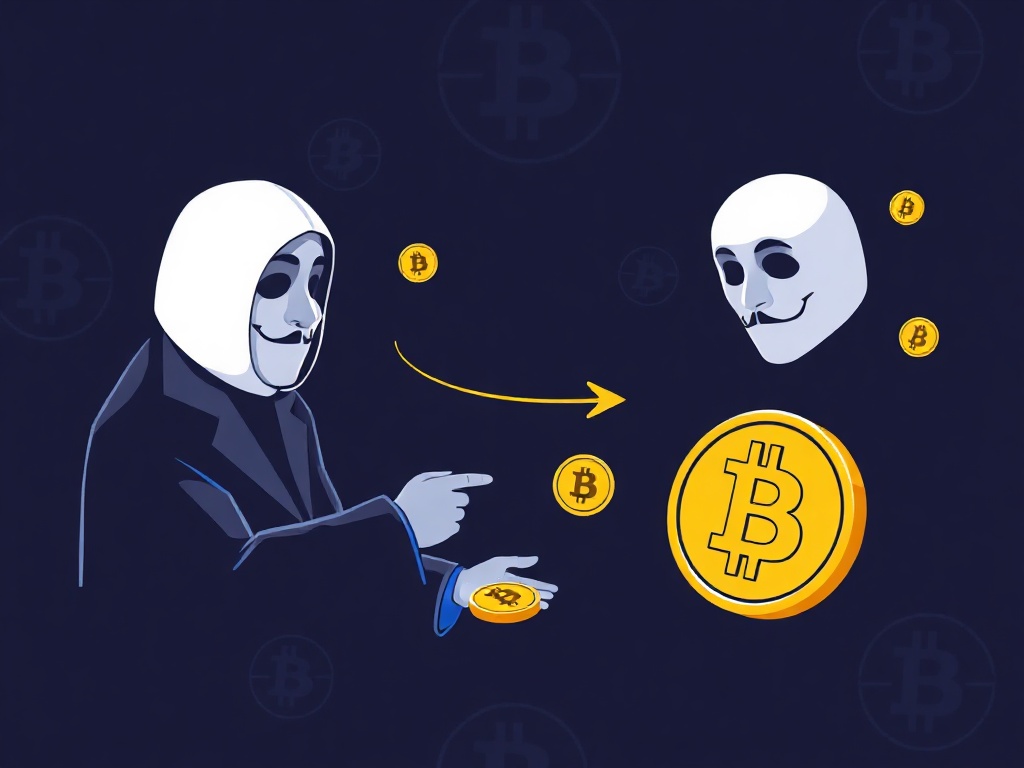
Ring signatures allow a Monero transaction to be signed by a group of possible signers, making it impossible to determine which member of the group actually authorized the transaction. This is achieved through:
- Cryptographic Mixing: The sender’s input is mixed with a set of decoy inputs (called "mixins") from the blockchain, creating a "ring" of possible signers.
- One-Time Keys: Each transaction uses a unique, one-time key image, preventing double-spending while keeping the sender’s identity hidden.
For example, if Alice sends 1 XMR to Bob, the transaction will appear to be signed by Alice and several other users (even if they didn’t actually sign it). This makes it statistically improbable for an outside observer to determine who the real sender is.
2. Stealth Addresses: Protecting the Recipient
While ring signatures hide the sender, stealth addresses ensure that the recipient’s identity remains confidential. Here’s how it works:
- One-Time Addresses: When Bob wants to receive Monero, his wallet generates a unique, one-time address for each transaction. This address is derived from his public key but cannot be linked back to his wallet.
- View Keys: Monero users can share a "view key" with trusted parties (e.g., auditors) to allow them to see incoming transactions without compromising privacy.
This means that even if someone knows Bob’s public address, they cannot track his transaction history because each payment is sent to a new, unrelated address.
3. Ring Confidential Transactions (RingCT): Concealing Transaction Amounts
One of the most significant advancements in Monero’s privacy toolkit is RingCT, introduced in 2017. RingCT does two critical things:
- Hides Transaction Amounts: Unlike Bitcoin, where transaction values are publicly visible, RingCT ensures that the amount sent in a Monero transaction is encrypted and only visible to the sender and recipient.
- Improves Efficiency: RingCT reduces the size of transactions while maintaining strong privacy guarantees.
With RingCT, Monero achieves confidential transactions, meaning that even if someone analyzes the blockchain, they cannot determine how much XMR was sent in a particular transaction.
Together, these three technologies—ring signatures, stealth addresses, and RingCT—form the backbone of Monero’s privacy. But how do they compare to other privacy coins? Let’s explore that in the next section of our Monero privacy review.
---Monero vs. Other Privacy Coins: How Does XMR Stack Up?
Monero isn’t the only privacy-focused cryptocurrency—coins like Zcash, Dash, and Grin also aim to provide anonymous transactions. However, Monero’s approach to privacy is fundamentally different, and in many ways, more robust. In this section of our Monero privacy review, we’ll compare Monero to its main competitors and evaluate which coin offers the best privacy guarantees.
Monero vs. Zcash: Transparent vs. Opaque Privacy Models
Zcash, another leading privacy coin, uses a different cryptographic technique called zk-SNARKs (Zero-Knowledge Succinct Non-Interactive Arguments of Knowledge) to achieve privacy. Here’s how the two compare:
| Feature | Monero | Zcash |
|---|---|---|
| Privacy by Default | ✅ All transactions are private by default | ❌ Users must explicitly choose to send a "shielded" transaction |
| Transaction Visibility | ✅ Fully opaque (sender, receiver, amount hidden) | ⚠️ Only shielded transactions are private; transparent transactions are traceable |
| Decentralization of Privacy | ✅ Privacy is guaranteed by the protocol | ❌ Relies on a trusted setup (toxic waste problem) |
| Adoption & Liquidity | ✅ Widely accepted on exchanges and in privacy-focused services | ⚠️ Lower adoption due to optional privacy and regulatory concerns |
Key Takeaway: While Zcash offers strong privacy for shielded transactions, its reliance on optional privacy and the controversial trusted setup make it less reliable than Monero for users who prioritize anonymity. In our Monero privacy review, we conclude that Monero’s default privacy model is superior for most users.
Monero vs. Dash: Privacy as an Optional Feature
Dash, originally a Bitcoin fork, introduced a privacy feature called PrivateSend, which mixes transactions to obscure their origin. However, this feature has several limitations:
- Centralized Mixing: PrivateSend relies on a masternode network, which introduces centralization risks.
- Optional Privacy: Users must actively choose to use PrivateSend, unlike Monero, where privacy is automatic.
- Limited Adoption: PrivateSend is rarely used in practice, making Dash transactions almost as traceable as Bitcoin.
In contrast, Monero’s privacy is always on, requiring no additional steps from the user. This makes it a far more practical choice for those who need strong financial privacy.
Monero vs. Grin: Mimblewimble’s Privacy Trade-Offs
Grin, a privacy coin based on the Mimblewimble protocol, offers another approach to anonymity. Mimblewimble combines:
- Confidential Transactions: Hides transaction amounts.
- Cut-Through: Reduces blockchain bloat by removing unnecessary data.
However, Mimblewimble has some drawbacks:
- No Address Reuse Protection: Unlike Monero’s stealth addresses, Mimblewimble does not inherently prevent address reuse.
- Lower Adoption: Grin is less widely supported than Monero.
- Scalability vs. Privacy: While Mimblewimble improves scalability, it may sacrifice some privacy features compared to Monero.
In our Monero privacy review, we find that Monero’s combination of ring signatures, stealth addresses, and RingCT provides a more comprehensive privacy solution than Mimblewimble-based coins like Grin.
Final Verdict: While other privacy coins have their strengths, Monero remains the most reliable and user-friendly option for those seeking true financial anonymity. Its default privacy, strong cryptographic foundations, and widespread adoption make it the leader in the privacy coin space.
---Real-World Use Cases: How Monero’s Privacy Features Are Used Today
Monero’s privacy isn’t just theoretical—it’s being used in real-world scenarios where financial anonymity is crucial. In this section of our Monero privacy review, we’ll explore some of the most common use cases for Monero and how its privacy features benefit different groups of users.
1. Everyday Purchases & E-Commerce
Many online merchants now accept Monero as a payment method, allowing customers to make purchases without exposing their financial history. Some notable examples include:
- Cryptocurrency Exchanges: Platforms like Kraken and Bitfinex allow users to trade Monero while maintaining privacy.
- Privacy-Focused Marketplaces: Websites like Monero Outfitters sell merchandise exclusively in XMR.
- Darknet Markets: While not condoning illegal activity, it’s worth noting that Monero is widely used on darknet markets due to its strong privacy guarantees.
For consumers who value financial privacy, Monero provides a way to spend without leaving a traceable digital footprint.
2. Journalism & Whistleblowing
Investigative journalists and whistleblowers often need to receive funds anonymously to protect their identities. Monero’s stealth addresses and ring signatures make it an ideal tool for:
- Anonymous Donations: Organizations like WikiLeaks have accepted Monero donations to fund their operations without revealing donor identities.
- Secure Tip Lines: Some news organizations use Monero to pay sources who wish to remain anonymous.
In a world where surveillance and censorship are growing concerns, Monero provides a lifeline for those who need to move money discreetly.
3. Business & Corporate Privacy
Businesses, especially in industries where financial transparency could lead to competitive disadvantages, are turning to Monero for:
- Confidential Transactions: Companies can pay suppliers or employees without exposing sensitive financial data.
- Mergers & Acquisitions: Firms involved in M&A deals can use Monero to transfer funds securely without tipping off competitors.
- Cross-Border Payments: Businesses dealing with international transactions can avoid currency conversion fees and regulatory scrutiny by using XMR.
For corporations that prioritize confidentiality, Monero offers a way to conduct financial operations without the prying eyes of competitors or regulators.
4. Censorship Resistance & Financial Freedom
In countries with strict capital controls or authoritarian governments, Monero provides a way to bypass financial censorship. Some key examples include:
- Venezuela & Hyperinflation: Citizens in hyperinflationary economies use Monero to preserve their wealth when local currencies collapse.
- China & Capital Controls: Despite China’s crypto bans, some users still trade Monero peer-to-peer to move funds internationally.
- Russia & Sanctions: Russian citizens and businesses use Monero to evade Western sanctions and maintain financial sovereignty.
Monero’s decentralized nature means that no government or financial institution can freeze or seize funds, making it a powerful tool for financial freedom.
These real-world use cases demonstrate that Monero’s privacy features are not just theoretical—they have tangible benefits for individuals, businesses, and even entire economies. But what about the challenges and limitations of Monero? Let’s address those in the next section of our Monero privacy review.
---Challenges & Limitations: What Are the Weaknesses of Monero’s Privacy?
While Monero is widely regarded as the most private cryptocurrency, it’s not without its challenges. In this section of our Monero privacy review, we’ll examine some of the potential weaknesses and limitations of Monero’s privacy features, as well as ongoing efforts to address them.
1. Transaction Size & Scalability Issues
Monero’s privacy features—particularly ring signatures and RingCT—result in larger transaction sizes compared to transparent coins like Bitcoin. This can lead to:
- Higher Fees: Larger transactions require more block space, which can drive up fees during network congestion.
- Slower Confirmations: Miners may prioritize smaller transactions, leading to delays for Monero users.
- Storage Bloat: The Monero blockchain grows faster than Bitcoin’s due to the additional data required for privacy.
However, Monero’s development team is actively working on solutions, such as:
- Bulletproofs: A cryptographic upgrade that reduces transaction sizes by ~80%.
- Triptych & Arcturus: Next-generation privacy protocols that further improve efficiency.
2. Potential De-Anonymization Risks
While Monero’s privacy is strong, no system is entirely foolproof. Some potential risks include:
- Side-Channel Attacks: If a user’s wallet is compromised (e.g., through malware), their transaction history could be exposed.
- Metadata Leakage: If a user links their Monero address to their identity (e.g., by posting it publicly), their transaction history could be traced.
- Exchange Traces: Some exchanges require KYC (Know Your Customer) verification, which could link Monero transactions to real-world identities.
To mitigate these risks, users should:
- Use a Dedicated Wallet: Avoid reusing addresses and use a fresh wallet for each transaction.
- Run a Full Node: Running a Monero node ensures you’re not relying on third-party servers that could log your IP address.
- Use a VPN/Proxy: Mask your IP address when making transactions to prevent tracking.
3. Regulatory & Exchange Delisting Risks
Monero’s strong privacy features have made it a target for regulators, particularly in jurisdictions with strict anti-money laundering (AML) laws. Some risks include:
- Exchange Delistings: Some exchanges
 Robert HayesDeFi & Web3 Analyst
Monero Privacy Review: A Deep Dive into the Gold Standard of Financial Privacy
As a DeFi and Web3 analyst with a focus on privacy-preserving technologies, I’ve closely examined Monero’s cryptographic foundations and its real-world implications for users seeking financial anonymity. Monero’s privacy isn’t just a feature—it’s a meticulously engineered system that combines ring signatures, stealth addresses, and RingCT to obfuscate transaction trails. Unlike Bitcoin’s pseudonymous but traceable ledger, Monero’s default privacy ensures that sender, receiver, and amount remain confidential, making it the de facto choice for users prioritizing censorship resistance. However, its privacy model isn’t infallible—academic research has highlighted potential vulnerabilities in transaction graph analysis, particularly when combined with metadata leaks (e.g., IP exposure via unprotected nodes). For DeFi practitioners, this underscores the importance of layering Monero’s privacy with additional operational security measures, such as using Tor or I2P for node connections.
From a practical standpoint, Monero’s privacy review reveals both strengths and trade-offs that DeFi analysts must weigh. On the upside, its Kovri integration (though still in development) promises to further shield transaction origins by routing traffic through I2P, mitigating IP-based deanonymization risks. Yet, the trade-off lies in Monero’s scalability challenges—its privacy features inflate transaction sizes, leading to higher fees compared to transparent chains like Bitcoin or Ethereum. For yield farmers or liquidity providers, this means Monero isn’t ideal for high-frequency trading but excels in long-term wealth preservation or cross-border transactions where privacy is paramount. Additionally, regulatory scrutiny remains a wildcard; while Monero’s privacy is mathematically robust, exchanges and DeFi platforms may delist it due to compliance pressures. My recommendation? Use Monero as a core privacy tool in a diversified strategy, but always pair it with other privacy-enhancing solutions (e.g., zk-SNARKs in DeFi) to mitigate single points of failure.