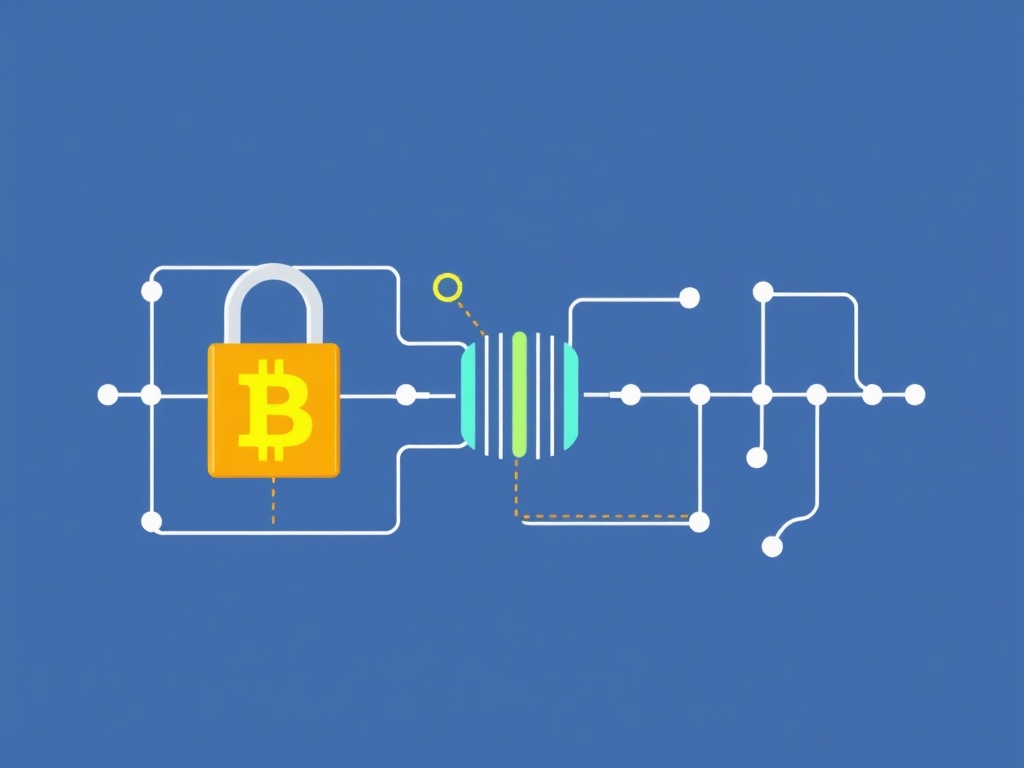
The Ultimate Guide to rendez-vous routing lightning for btcmixer_en2 Users

In the rapidly evolving landscape of digital asset privacy and efficiency, rendez-vous routing lightning has emerged as a pivotal concept for btcmixer_en2 operators seeking to optimize transaction pathways while maintaining robust anonymity standards. This comprehensive guide delves into the mechanics, advantages, and practical implementation of rendez-vous routing lightning within the btcmixer_en2 framework, offering readers a clear roadmap to enhanced performance and security.
The term rendez-vous routing lightning refers to a specialized routing methodology that leverages Lightning Network dynamics to facilitate direct, time-bound connections between mixing nodes. Unlike traditional on-chain routing, this approach utilizes off-chain payment channels, reducing latency and lowering transaction costs. For btcmixer_en2 users, understanding these mechanics is not merely technical—it is a strategic imperative.
Foundational Principles of Rendez-Vous Routing Lightning
What Defines Rendez-Vous Routing Lightning?
At its core, rendez-vous routing lightning operates on the principle of pre-arranged connection points, where two parties agree on a temporary routing path before a transaction is broadcast. This "rendezvous" point ensures that both the sender and receiver have verified channel capacity and compatible routing policies, minimizing the risk of failed payments or exposed metadata.
The Role of Lightning Network Protocols
The Lightning Network provides the underlying infrastructure that makes rendez-vous routing lightning possible. By using Hash Time-Locked Contracts (HTLCs) and multipath payments, the system can split large transactions across multiple channels, each with its own expiration window. This architecture is particularly beneficial for btcmixer_en2, where high-volume mixing demands both speed and resilience.
Comparative Advantages Over Traditional Routing
- Reduced Exposure: By establishing temporary routing agreements, the window for metadata leakage is significantly narrowed.
- Lower Fees: Off-chain routing avoids on-chain congestion fees, making frequent mixing more cost-effective.
- Enhanced Privacy: The use of channel-specific routing limits the visibility of transaction graphs to external observers.
Integrating Rendez-Vous Routing Lightning into btcmixer_en2 Workflows
Step-by-Step Implementation Protocol
- Channel Provisioning: Ensure each mixing node maintains adequate outbound and inbound Lightning capacity. A minimum of 0.5 BTC equivalent per channel is recommended for high-frequency operations.
- Rendezvous Point Configuration: Define static IP endpoints or DNS-based rendezvous servers that routing nodes will reference during handshake protocols.
- Policy Negotiation: Use Lightning's
optionfields to broadcast routing preferences, such as maximum hop count and preferred channel types. - HTLC Setup: Configure Hash Time-Locked Contracts with a 48-hour settlement window, balancing urgency with the chance for route rebalancing.
- Monitoring and Adjustment: Implement real-time analytics to track route success rates, average settlement time, and any anomalous node behavior.
Common Pitfalls and Mitigation Strategies
Even experienced btcmixer_en2 administrators can encounter challenges when deploying rendez-vous routing lightning. One frequent issue is insufficient channel liquidity, which can cause HTLC timeouts and failed mixes. To mitigate this, operators should employ automated rebalancing tools and maintain a diversified channel portfolio across multiple Lightning Service Providers (LSPs). Another concern is the potential for routing centralization; to counteract this, rotate rendezvous points every 30 days and avoid reliance on a single high-capacity node.
Security Framework for Rendez-Vous Routing Lightning
Threat Modeling and Risk Assessment
Security in the context of rendez-vous routing lightning extends beyond standard node hardening. Operators must consider routing graph analysis, where adversaries attempt to de-anonymize users by mapping frequent rendezvous patterns. Implementing dynamic channel rotation—whereby routing paths change with each transaction batch—significantly raises the difficulty of such analyses.
Best Practices for Node Hardening
- Run the latest stable version of LND, Core Lightning, or Eclair, as each release patches critical routing vulnerabilities.
- Enable
chan-disableandchan-reservepolicies to prevent channel exhaustion attacks. - Employ outbound capacity diversification by opening channels with nodes in geographically distinct regions, reducing the risk of regional network partitions.
- Regularly audit
invoiceandpaymentlogs for duplicate or replayed HTLCs, which may indicate attempted routing manipulation.
Compliance and Legal Considerations
While rendez-vous routing lightning enhances technical privacy, btcmixer_en2 operators must remain vigilant regarding regional regulatory frameworks. Some jurisdictions impose strict Know Your Customer (KYC) requirements on Lightning node operators. Maintaining transparent operational logs and conducting periodic legal reviews ensures that privacy enhancements do not inadvertently facilitate non-compliant activities.
Performance Metrics and Optimization Techniques
Key Performance Indicators (KPIs)
To gauge the effectiveness of your rendez-vous routing lightning deployment, track the following metrics:
- Route Success Rate: Percentage of HTLCs settled within the designated window. Target: >95% for production environments.
- Average Settlement Time: Mean time from payment initiation to finality. Ideal values range between 2 and 10 seconds.
- Fee per Mix: Total Lightning fees divided by the number of transactions mixed. Compare against on-chain baselines to quantify savings.
- Liquidity Utilization: Ratio of active channel capacity to total committed funds. Aim for 60-80% to maintain flexibility.
Advanced Optimization Strategies
Beyond baseline metrics, sophisticated btcmixer_en2 users can employ machine learning-assisted route selection. By feeding historical routing data into predictive models, operators can identify optimal rendezvous points that minimize both cost and exposure. Additionally, gossip protocol tuning—adjusting how frequently your node broadcasts channel state—can influence the quality of routes offered by peer nodes, often resulting in more favorable fee structures.
Another effective technique is multipath payment splitting, where a single mixing batch is divided across 3-5 independent routes. This not only distributes liquidity risk but also obscures the total transaction size from any single observer, further bolstering the privacy guarantees inherent to rendez-vous routing lightning.
Future Outlook: The Evolution of Rendez-Vous Routing Lightning in btcmixer_en2
Emerging Technologies and Protocol Upgrades
The Lightning Network roadmap includes several upgrades poised to enhance rendez-vous routing lightning capabilities. Taproot and Tapscript additions will enable more complex HTLC conditions, allowing for conditional routing based on external data feeds. Meanwhile, gossip vanity routing—a proposed feature where nodes can advertise preferred routing attributes without revealing full channel graphs—promises to further decouple routing efficiency from privacy trade-offs.
Community-Driven Development
Open-source communities are actively refining rendezvous point algorithms, with a focus on reducing latency while maintaining decentralization. For btcmixer_en2 stakeholders, participating in testnet deployments and contributing feedback to core Lightning implementations can shape the next generation of routing standards. Expect to see more granular fee estimation models and automated compliance checks integrated directly into routing daemons.
Strategic Recommendations for btcmixer_en2 Leaders
To remain at the forefront of mixing technology, consider the following forward-looking actions:
- Allocate budget for quarterly node software upgrades and security audits.
- Establish a dedicated research channel for exploring experimental routing protocols.
- Foster partnerships with LSPs that prioritize privacy-preserving infrastructure.
- Document all rendez-vous routing lightning configurations in a centralized, access-controlled repository to ensure institutional knowledge retention.
As the digital privacy landscape continues to shift, the integration of sophisticated routing methodologies like rendez-vous routing lightning will distinguish leading btcmixer_en2 platforms from their competitors. By mastering the principles outlined in this guide, operators can achieve unprecedented levels of transaction efficiency, cost reduction, and user anonymity. The journey toward routing excellence is ongoing, but with the right technical foundation and strategic vision, the opportunities are boundless.
- Prioritize channel liquidity diversification to sustain high-volume mixing operations.
- Implement dynamic rendezvous point rotation to counteract graph analysis attacks.
- Leverage multipath payments and predictive routing models for optimal performance.
- Stay informed about Lightning Protocol upgrades and contribute to community-driven improvements.
In conclusion, rendez-vous routing lightning represents more than a technical specification; it is a strategic asset for any btcmixer_en2 operator committed to excellence in digital asset mixing. By adhering to the frameworks, security practices, and optimization strategies detailed herein, you position your infrastructure not only to meet current demands but to

rendez-vous routing lightning: Strategic Opportunities in Next-Gen Crypto Payments
As a certified financial analyst with over a decade of experience guiding both retail and institutional investors through the evolving digital asset ecosystem, I've witnessed the lightning network transform from a niche scalability solution into a critical infrastructure layer for real-time crypto payments. The emergence of advanced routing mechanisms, particularly rendez-vous routing lightning, signals a maturation of the protocol that addresses long-standing liquidity fragmentation and path-finding inefficiencies. For investors, understanding these technical upgrades is not merely an academic exercise; it directly impacts the viability, risk profile, and yield potential of crypto-native payment instruments and layer-two exposure.
What makes rendez-vous routing lightning particularly compelling from a strategic standpoint is its ability to optimize multi-path payments across heterogeneous channel topologies while minimizing settlement risk and fee leakage. In practical terms, this means faster, more predictable transaction finality and improved capital efficiency for participants who deploy capital into liquidity provision or channel management strategies. From my vantage point, the technology reduces the operational friction that has historically deterred conservative allocators from deepening their engagement with the Lightning Network, thereby broadening the addressable market for crypto payment solutions.
For investors looking to position themselves ahead of the curve, I recommend a two-pronged approach: first, allocate exposure to projects and funds that are actively integrating or building atop optimized routing layers, and second, maintain a disciplined risk framework that accounts for the still-evolving regulatory and technical landscape around layer-two protocols. The convergence of enhanced routing semantics with broader institutional adoption could redefine value transfer paradigms in crypto, and early comprehension of mechanisms like rendez-vous routing lightning will be a decisive differentiator in navigating that transition.