Transaction Graph Obfuscation: Enhancing Privacy in the btcmixer_en2 Era
The evolution of blockchain analytics has intensified the demand for robust privacy mechanisms. Among the most sophisticated approaches is transaction graph obfuscation, a technique designed to obscure the linkages between sender and recipient addresses on a distributed ledger. As surveillance tools become more granular, the need to disrupt heuristic clustering, flow analysis, and address correlation grows exponentially. In this context, the btcmixer_en2 framework emerges as a notable case study, integrating obfuscation layers that aim to protect user sovereignty while navigating the thin line between privacy and compliance.
The Fundamentals of Transaction Graph Obfuscation
What Is Transaction Graph Obfuscation?
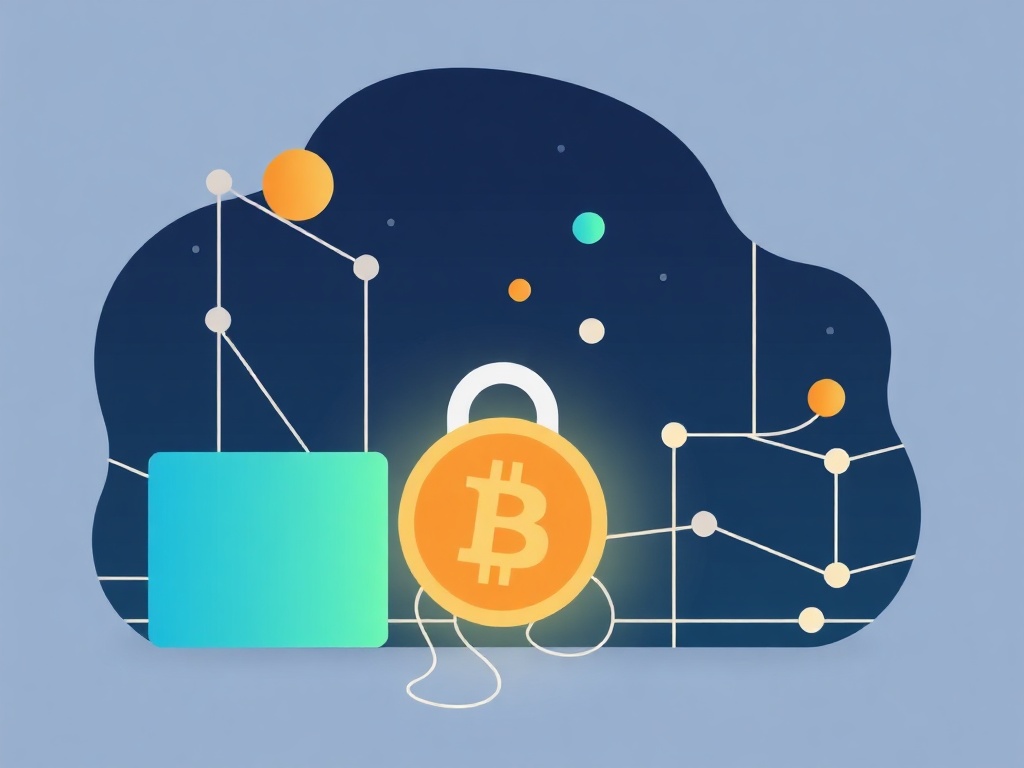
At its core, transaction graph obfuscation refers to the deliberate restructuring of on-chain data to mask the true topology of fund movements. Traditional Bitcoin and cryptocurrency transactions leave a permanent, traceable trail. Every input and output is visible, allowing analysts to map capital flows, identify counterparties, and deanonymize participants. Obfuscation disrupts this transparency by introducing noise, decoys, and routing paths that decouple the original sender from the final beneficiary.
The mechanics rely on several foundational principles. First, address pooling consolidates multiple user funds into a single output, then redistributes them in a manner that breaks direct attribution. Second, temporal decoupling introduces time delays between the original transaction and the obfuscated output, confusing time-series analysis. Third, value masking ensures that the amounts transferred do not correlate with the original inputs, further frustrating quantitative analysis.
The Privacy Imperative in Decentralized Systems
Privacy is not synonymous with illicit activity; it is a foundational component of financial freedom. In decentralized ecosystems, users expect the same level of discretion traditionally afforded by cash transactions. However, the pseudonymous nature of many blockchains often falls short of this expectation. Transaction graph obfuscation bridges this gap by providing a technical veneer of confidentiality without altering the underlying consensus protocol. It empowers users to retain control over their financial data while preserving the integrity of the network.
Moreover, as regulatory scrutiny tightens, the conversation shifts from "if" to "how" privacy tools should be implemented. Obfuscation techniques must evolve in tandem with analytics capabilities, creating an arms race that drives innovation on both sides. The btcmixer_en2 platform exemplifies this dynamic, offering users a suite of tools designed to enhance privacy while remaining adaptable to emerging detection methods.
Core Techniques for Graph Obfuscation
Address Stratification and Rotation
One of the most prevalent methods within transaction graph obfuscation is address stratification. This technique involves segmenting a user's holdings across multiple addresses, each serving a distinct purpose. By rotating funds through a series of intermediate addresses before reaching the final destination, the direct link between origin and destination is effectively severed. This approach is particularly effective against simple clustering algorithms that assume a one-to-one relationship between inputs and outputs.
Rotation takes stratification a step further by introducing periodic address changes. Users periodically shift their active addresses, rendering any static graph analysis obsolete. When combined with change address obfuscation, where the leftover balance from a transaction is sent to a newly generated address rather than reused, the resulting graph becomes a complex web that is computationally expensive to untangle.
- Hierarchical deterministic (HD) wallet integration allows for seamless generation of new addresses without exposing the master seed.
- Coin control features enable users to selectively spend from specific inputs, avoiding the automatic mixing of funds.
- Decoy transactions introduce irrelevant outputs that mimic legitimate user behavior, overwhelming analysts with false leads.
Temporal and Value-Based Masks
Beyond address manipulation, sophisticated obfuscation incorporates temporal and value-based strategies. Temporal masking involves scheduling transactions during periods of high network activity, making it difficult to isolate specific flows amidst the noise. Additionally, value randomization adjusts the transferred amounts slightly above or below the original value, disrupting pattern recognition models that rely on exact monetary matches.
These techniques are often layered. For instance, a user might first stratify funds across five addresses, then rotate those addresses every 48 hours, and finally execute the final payout during a market surge. The cumulative effect creates a graph that is semantically meaningful yet structurally opaque. The btcmixer_en2 ecosystem leverages such layered approaches, allowing users to customize the intensity of obfuscation based on their risk tolerance and privacy needs.
The btcmixer_en2 Framework and Its Obfuscation Layer
Integration Strategies within btcmixer_en2
The btcmixer_en2 platform has positioned itself at the intersection of user-centric design and advanced privacy engineering. Its obfuscation layer is not a mere afterthought but a core architectural component. By leveraging a decentralized routing network, btcmixer_en2 ensures that each user's transaction passes through a series of independent nodes before settlement. This multi-hop architecture fundamentally alters the on-chain graph, replacing direct links with indirect pathways.
Furthermore, btcmixer_en2 employs transaction graph obfuscation through dynamic fee structures. By varying the fees attached to obfuscated transactions, the platform prevents analysts from correlating transaction priority with user intent. The result is a graph where the economic incentives do not align with the actual flow of funds, adding another layer of cognitive load for anyone attempting to deanonymize the network.
User Experience vs. Anonymity Sets
A critical design challenge for any obfuscation-focused service is balancing usability with the size of the anonymity set. A larger anonymity set—meaning more users' funds are pooled together—generally offers stronger privacy guarantees but may increase transaction times and fees. btcmixer_en2 addresses this by offering tiered obfuscation profiles. Casual users can select a light obfuscation mode, which introduces minimal delays and preserves near-normal transaction speeds. Privacy-conscious power users can opt into deep obfuscation, which maximizes graph disruption at the cost of increased latency.
This modular approach ensures that transaction graph obfuscation remains accessible across different user profiles. It also reflects a broader industry trend toward personalized privacy, recognizing that a one-size-fits-all solution often fails to meet diverse operational requirements. The platform's dashboard provides real-time metrics on the expected anonymity set size, expected delay, and fee impact, empowering users to make informed decisions.
Analytical Detection and Counter-Obfuscation
Graph Analysis Techniques
As obfuscation techniques evolve, so too do the tools designed to penetrate them. Blockchain forensics firms employ sophisticated graph analysis algorithms that examine not just individual transactions but the broader network topology. Techniques such as shortest path analysis, centrality measurement, and community detection can identify clusters of addresses that, while not directly linked, share behavioral similarities. When combined with off-chain data—such as KYC-verified exchange accounts or IP address tracking—these methods can sometimes pierce through even robust obfuscation.
Another emerging technique is behavioral fingerprinting. By analyzing the timing, frequency, and value patterns of transactions, analysts can build probabilistic models of user activity. Even if the graph structure is obscured, the underlying behavioral signatures may remain discernible. This cat-and-mouse dynamic underscores the importance of continuous innovation in obfuscation methodologies.
Machine Learning and Pattern Recognition
The integration of machine learning into analytics pipelines has amplified detection capabilities. Supervised models trained on known obfuscated vs. non-obfuscated graphs can learn to identify subtle anomalies indicative of graph manipulation. Unsupervised clustering algorithms, meanwhile, can group transactions based on latent features without prior labeling, potentially revealing hidden structures within seemingly chaotic data.
In response, developers of obfuscation frameworks like btcmixer_en2 are exploring adversarial training techniques. By simulating potential detection models and iteratively refining their obfuscation parameters, they aim to stay ahead of predictive analytics. This proactive stance reflects the dynamic nature of the privacy arms race, where static defenses quickly become obsolete in the face of adaptive adversaries.
Ethical, Legal, and Operational Considerations
Compliance Challenges
The deployment of transaction graph obfuscation tools intersects with an increasingly complex regulatory landscape. Jurisdictions worldwide are enacting stricter anti-money laundering (AML) and know-your-customer (KYC) requirements, often mandating that service providers implement measures to prevent the facilitation of illicit flows. For platforms like btcmixer_en2, this necessitates a delicate balancing act: providing robust privacy features while adhering to legal obligations.
Some jurisdictions view obfuscation-friendly services with suspicion, potentially classifying them as money transmitters or mixing services subject to licensing requirements. Others take a more nuanced approach, recognizing the legitimate privacy needs of journalists, whistleblowers, and individuals operating in repressive regimes. The challenge lies in crafting policies that distinguish between privacy-enhancing technology and tools designed primarily to facilitate crime.
Future-Proofing Obfuscation Protocols
To remain effective, obfuscation protocols must be designed with future technological shifts in mind. The advent of quantum computing, for instance, could render current cryptographic assumptions obsolete, necessitating a overhaul of both consensus mechanisms and privacy layers. Additionally, the rise of layer-2 scaling solutions and cross-chain interoperability protocols introduces new graph surfaces that obfuscation techniques must account for.
Interdisciplinary collaboration will be key. Cryptographers, data scientists, legal scholars, and community advocates must work together to develop frameworks that are both technically sound and socially responsible. Open-source audits, standardized privacy metrics, and transparent governance models can help build trust and ensure that transaction graph obfuscation serves the broader public interest rather than niche interests alone.
Best Practices and Future Directions
Guidelines for Users
For individuals seeking to leverage transaction graph obfuscation effectively, several best practices emerge. First, diversify your toolkit. Relying on a single obfuscation method can create predictable patterns; combining address rotation, temporal masking, and value randomization yields stronger results. Second, stay informed. The analytics landscape shifts rapidly, and understanding the latest detection techniques can help you adjust your privacy strategy proactively. Third, prioritize reputable platforms. Whether using btcmixer_en2 or another service, verify that the underlying code is open to audit, the team maintains a track record of security, and the platform has clear privacy policies.
Additionally, users should be wary of "one-click" obfuscation promises that claim absolute anonymity. No technique can guarantee total invisibility on a public ledger. A healthy skepticism, combined with layered defenses, is the most reliable approach.
Emerging Trends
The future of transaction graph obfuscation will likely be shaped by several converging trends. Zero-knowledge proofs (ZK

Transaction Graph Obfuscation: Privacy, Risks, and Market Implications
As a digital assets strategist with a background in quantitative analysis and traditional finance, I view transaction graph obfuscation as a critical intersection of privacy engineering and market microstructure. In an era where on-chain transparency is both a feature and a vulnerability, the deliberate structuring or masking of transaction flows directly impacts capital efficiency, risk assessment, and regulatory compliance. My role involves parsing these dynamics not just through the lens of technical privacy, but as a measurable variable in portfolio construction and asset allocation.
From a practical standpoint, transaction graph obfuscation techniques—such as coinjoins, layer-two routing, and deliberate address rotation—alter the cost-benefit calculus of on-chain analytics. For institutional players, the ability to distinguish between genuine privacy-seeking behavior and attempts to mask illicit exposure is essential for due diligence. I’ve seen how misinterpreting obfuscated flows can lead to mispriced risk or unnecessary capital flight, which is why integrating graph-theoretic metrics into our risk models has become non-negotiable.
Looking forward, the strategic balance between transaction privacy and network transparency will define the next phase of digital asset maturation. While obfuscation enhances user sovereignty and protects against front-running, it also introduces layers of complexity that require sophisticated detection frameworks. My recommendation to clients is to treat transaction graph obfuscation not as a binary flag of suspicion, but as a nuanced data point that, when combined with macroeconomic and sentiment indicators, sharpens our edge in an increasingly competitive and regulated market.