What Is the Difference Between Mixing and Swapping Coins? Understanding the btcmixer_en2 Distinction
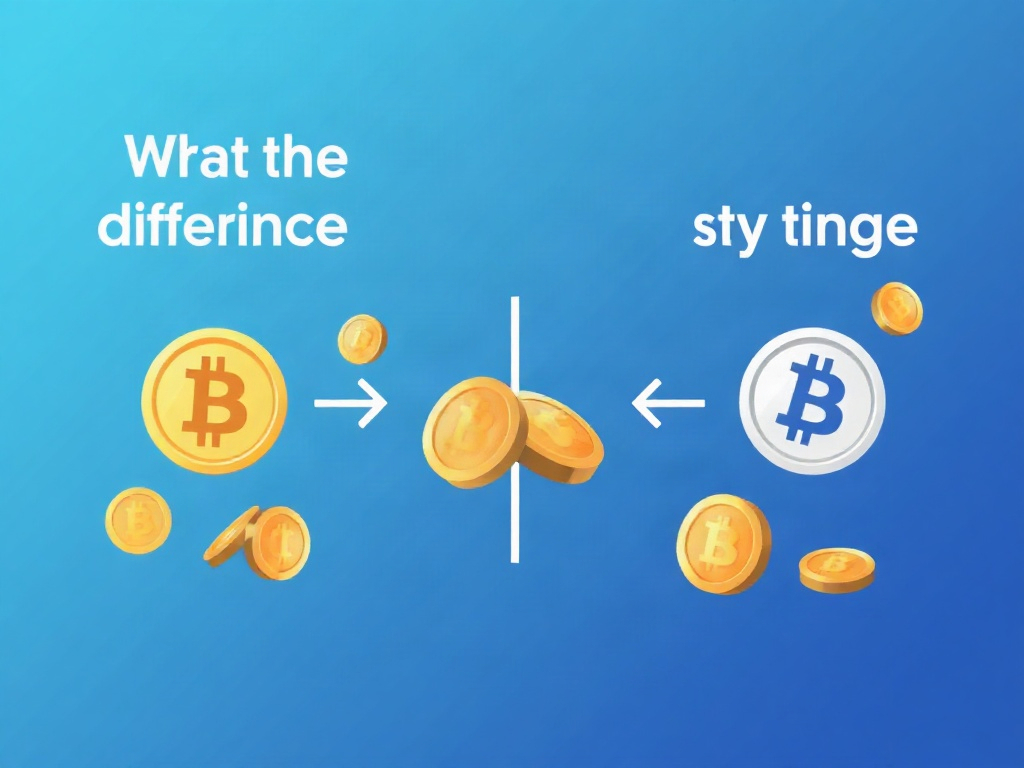
In the evolving landscape of cryptocurrency privacy and asset management, few questions arise as frequently as what is the difference between mixing and swapping coins. While both processes aim to obscure transaction trails or facilitate asset exchange, they operate on fundamentally different mechanisms, philosophies, and use cases. For users navigating the btcmixer_en2 ecosystem, understanding these distinctions is not just technical curiosity—it is essential for making informed decisions about privacy, security, and compliance. This article dives deep into the nuances of coin mixing versus coin swapping, exploring how each works, where they overlap, and why the btcmixer_en2 platform approaches them differently.
At its core, coin mixing is a privacy-enhancing technique designed to break the on-chain link between a sender and a receiver. When a user initiates a mix, their coins are pooled with those of other participants, shuffled through a series of transactions, and then redistributed in such a way that the original source becomes indistinguishable from the rest. The primary objective of mixing is anonymity. By obscuring the trail, mixing prevents blockchain analysis firms, surveillance entities, or even casual observers from tracing the flow of funds back to their origin. In the context of btcmixer_en2, mixing is implemented through sophisticated algorithms that ensure uniform distribution, time-delayed outputs, and cryptographic proof of fairness, all without requiring the user to surrender control of their private keys.
The mechanics of mixing typically involve a trusted or trustless aggregator. In a trusted model, the mixer holds the pooled funds and releases equivalent amounts to designated recipients after a waiting period, often aided by randomized time delays to frustrate timing analysis. In a trustless model, smart contracts or decentralized protocols automate the shuffling process using zero-knowledge proofs or coinjoin techniques, eliminating the need for a central authority. Regardless of the implementation, the end goal remains the same: to provide a layer of privacy that makes what is the difference between mixing and swapping coins a question of method rather than mere semantics.
Defining Coin Swapping: How It Differs Fundamentally
While mixing focuses on privacy, coin swapping is primarily about asset conversion and liquidity optimization. Swapping refers to the process of exchanging one cryptocurrency for another, or one token standard for another, often across different blockchains or liquidity pools. Unlike mixing, which keeps the same type of asset but obfuscates its history, swapping changes the very nature of the coin. If you swap Bitcoin for Ethereum, you no longer hold Bitcoin; you now hold Ethereum. The transaction is transparent on the destination chain, and the focus is on rate, speed, and reliability rather than anonymity.
In practical terms, coin swapping can occur through centralized exchanges (CEXs), decentralized exchanges (DEXs), or atomic swap protocols. CEXs act as intermediaries, holding user funds and executing trades against order books, often providing the best liquidity but requiring KYC compliance. DEXs use liquidity pools and automated market makers (AMMs) to facilitate trustless swaps, where users retain custody of their assets until the moment of exchange. Atomic swaps, on the other hand, enable peer-to-peer cross-chain exchanges without a intermediary, using hash time-locked contracts (HTLCs) to ensure that either both parties receive their assets or neither does. Each of these methods serves a different purpose, and understanding what is the difference between mixing and swapping coins helps users choose the right tool for their specific goal—whether that goal is privacy, diversification, or accessing a different ecosystem.
The Mechanics of Swapping
The technical execution of a swap depends on the underlying infrastructure. In a centralized swap, the user deposits their source asset into an exchange wallet, and the exchange credits their account with the target asset at the prevailing market rate. This process is fast and user-friendly but introduces custodial risk. In a decentralized swap, the user interacts with a smart contract that locks their input asset and mints or releases an equivalent amount of the output asset. The price is determined by the pool's ratio, and slippage can occur if the trade size exceeds the available liquidity. Atomic swaps require both parties to agree on the swap parameters, lock their respective assets in time-locked contracts, and reveal cryptographic preimages to claim the other's funds. If either party fails to complete their side within the timeout, the locks expire and funds are returned, ensuring trustless execution.
Use Cases and Trade Dynamics
Swapping is driven by a variety of motivations. Traders swap to rebalance portfolios, capture arbitrage opportunities, or move into assets with better fundamentals or lower risk. Users may swap to access decentralized finance (DeFi) protocols that operate on a specific blockchain, such as swapping Bitcoin to Wrapped Bitcoin (WBTC) to interact with Ethereum-based lending platforms. Businesses might swap to convert customer payments into a preferred operating currency, hedging against volatility in the process. Unlike mixing, which is often a one-time privacy measure, swapping can be a recurring activity, integrated into trading bots, portfolio management tools, or automated financial workflows. The btcmixer_en2 platform recognizes these dynamics and offers integrated swapping features that prioritize competitive rates while maintaining a separate privacy layer for users who also require mixing services.
Key Differences Between Mixing and Swapping
To clearly articulate what is the difference between mixing and swapping coins, it helps to compare them across several dimensions. The table below summarizes the most critical distinctions, though the following paragraphs dive deeper into each category.
- Objective: Mixing prioritizes privacy and transaction obfuscation; swapping prioritizes asset conversion and liquidity.
- Asset Type: Mixing preserves the same coin type but hides its history; swapping changes the coin type entirely.
- On-Chain Transparency: Mixing aims to reduce transparency, making tracing difficult; swapping is inherently transparent, with all details recorded on the destination ledger.
- Trust Model: Mixing can be trustless (decentralized coinjoins) or trusted (centralized tumblers); swapping ranges from fully custodial (CEXs) to trustless (atomic swaps, DEX AMMs).
- User Control: Mixing often allows users to retain control of their keys throughout the process; swapping typically requires transferring custody to an intermediary, though non-custodial options exist.
- Regulatory Implications: Mixing may attract heightened scrutiny from regulators due to its association with money laundering concerns; swapping is generally viewed as a standard financial activity, though cross-chain swaps can trigger reporting requirements.
Understanding these differences is crucial for anyone operating within the btcmixer_en2 niche, as the platform is designed to support both privacy-focused mixing and seamless asset swapping, allowing users to toggle between the two depending on their immediate needs. The separation of these functions ensures that privacy seekers are not forced to navigate conversion hurdles, while traders can execute swaps without compromising their transaction history.
Privacy vs. Conversion: The Core Tension
The core tension between mixing and swapping lies in their opposing objectives. Mixing is an anti-surveillance tool; it is designed to make blockchain analysis as difficult as possible. Swapping, by contrast, is a utility tool; it is designed to make asset movement as efficient as possible. When a user mixes coins, they are essentially asking, "How can I use these funds without revealing where they came from?" When a user swaps coins, they are asking, "How can I convert these funds into something more useful or desirable?" The btcmixer_en2 ecosystem addresses this tension by offering modular services: a dedicated mixing module for privacy, and a swapping module for conversion, each operating independently so that the output of one does not inadvertently compromise the other.
This modular approach also has implications for user experience. A user who wants to mix coins and then swap the mixed output into a different asset can do so by first running the mixing protocol, withdrawing the freshly shuffled coins to their wallet, and then initiating a swap from that wallet to the desired destination. Alternatively, btcmixer_en2 provides

what is the difference between mixing and swapping coins: A Crypto Investment Advisor’s Breakdown
As a certified financial analyst specializing in cryptocurrency investment strategies, I frequently encounter confusion around on-chain activities that seem similar but serve fundamentally different purposes. One of the most common questions I receive is about what is the difference between mixing and swapping coins, and while both involve moving value between addresses or tokens, the intent, mechanics, and risk profiles are worlds apart. Understanding this distinction is essential for anyone building or managing a digital asset portfolio, as the two actions operate on entirely different philosophies and carry unique implications for compliance, taxation, and strategy.
Coin mixing, often referred to as tumbling or CoinJoin, is primarily a privacy-enhancing technique. It pools transactions from multiple users and redistributes them, making it difficult to trace the original source or destination of funds. From an investment advisory standpoint, mixing is often employed by holders seeking to obfuscate their on-chain footprint, but it's important to note that certain mixing services have attracted regulatory scrutiny due to their association with illicit activity. The operational risk, potential for fund loss, and compliance red flags make mixing a strategy that requires careful due diligence and a thorough understanding of the legal landscape in your jurisdiction.
Swapping coins, on the other hand, is a straightforward exchange mechanism. Whether you're using a decentralized exchange like Uniswap, an atomic swap protocol, or a centralized platform, swapping simply means converting one cryptocurrency into another—think ETH for USDC, or swapping a governance token for a layer-2 asset. Unlike mixing, swapping is a utility-driven action that directly impacts portfolio allocation, taxable events, and market exposure. It's a core component of rebalancing, yield farming, or executing a strategic entry or exit point in a diversified crypto strategy, and it typically occurs on transparent venues with clear price discovery and liquidity guarantees.
For investors, the distinction matters because the two actions trigger very different considerations. Mixing prioritizes privacy but can introduce compliance risks and potential liquidity issues; swapping prioritizes asset conversion and portfolio management but generates taxable events and depends on market liquidity. My recommendation is always to clarify your objective first: if you're seeking privacy and understand the legal landscape, mixing may be a tool—but only with reputable, audited protocols. If you're rebalancing or executing a trade, swapping on a transparent, regulated platform is the safer, more efficient path. Understanding what is the difference between mixing and swapping coins isn't just technical jargon; it's a foundational element of risk management in digital asset investing.